Saturday, January 2, 2010

Consumer Electronics 2.0: MIT's Henry Holtzman on The Internet of Things

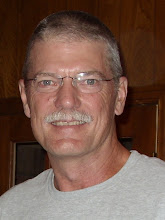
During my visit to MIT earlier this year I met up with Henry Holtzman, Chief Knowledge Officer of the MIT Media Lab. We discussed the Internet of Things, which Holtzman has been actively involved in since the 90s. Holtzman said that consumer apps for Web-connected objects are becoming more common; he refers to this as an emerging "ecology of devices." There are many real world objects being connected to the Internet nowadays, he said, and they are beginning to act in concert.


Read on to find out which Internet of Things products have most impressed Henry Holtzman lately, plus we explore some of his own projects.


Sponsor


redux_150x150.png

Editor's note: This story is part of a series we call Redux, where we'll re-publish some of our best posts of 2009. As we look back at the year - and ahead to what next year holds - we think these are the stories that deserve a second glance. It's not just a best-of list, it's also a collection of posts that examine the fundamental issues that continue to shape the Web. We hope you enjoy reading them again and we look forward to bringing you more Web products and trends analysis in 2010. Happy holidays from Team ReadWriteWeb!


I started off by remarking that the Internet of Things is ramping up in 2009. Holtzman replied that it's been many years in the making - for example he did a project back in 1997 involving putting RFID tags onto Pokemon figures. Indeed Holtzman created a commercial company in 1998 to output Internet of Things products.


Consumer Electronics 2.0


A Wired article from February 2000 outlines how Holtzman founded Presto Technologies in 1998, with fellow MIT Lab professors Andrew Lippman (see our recent post featuring Lippman) and Michael Hawley. The Presto network embedded RFID tags in objects. It was an early version of Internet of Things.


The vision for Presto was to make it an e-commerce tool - "products become roving portals for the companies that make them," according to the 2000 Wired article. While it was too early for that vision to transpire fully, Presto is still operating. One of its current products, PrestoPass, allows consumers to make purchases "by simply waving a card, key tag, or even a wristwatch."


Nowadays Holtzman refers to this trend as "consumer electronics 2.0." He cites an MIT spin-off company, Ambient Devices, as one to watch in this area. One of their products is the Ambient Clock, which can hook up to your Google Calendar.


Henry Holtzman's Favorite 2009 Products


As we've been reporting here on ReadWriteWeb this year, there are plenty of Internet of Things products making their presence felt in 2009. I asked Holtzman which products from the current era have particularly impressed him?


He replied that he really likes Violet, the company behind the Nabaztag (a cute robot rabbit that can deliver anything from ambient information, through lights and sounds, to verbal information). We reviewed Violet back in May.


Touchatag (formally known as Tikitag) is another company to have impressed Holtzman. As we wrote in February, Touchatag allows you to program your own RFID tags so that they can do anything you want. Holtzman said that he's been very impressed by the decisions the company has made, for example using adhesives. He also likes their 'web 2.0 savvy' - they host everything, but let the users create the content.


Internet of Things Concepts & Issues


I asked Henry Holtzman what other concepts are interesting him currently, as well as what issues are still to be overcome in the emerging Internet of Things.


He talked about using sensors as an "additional sense," by putting a tag reader on people. Not dissimilar to another Media Lab project we wrote about recently, a wearable internet system which aims to become a "sixth sense." Holtzman said that possible uses for sensors on people include: finding objects (for example your keys), raising an alert (e.g. a safety warning), a memory assist device, being a bridge between what you do in the real world and what gets recorded on your social network (e.g. Facebook updating when you're in certain locations; which we mentioned here).


As for issues: while currently light and temperature sensors are popular, Holtzman thinks that we need to do better job with location. But this is where RFID comes in.


One big issue that Holtzman is concerned about is identity. He told me that mobile phones that interact with objects using NFC (Near Field Communication) will need to work out how to federate around the same ID for a user. This is perhaps similar to the identity issues that the browser-based Web has.


Privacy and security are two other important issues that Holtzman has been focusing on of late.


It was great to speak with Henry Holtzman - someone with extensive experience, both theoretical and practical, in the Internet of Things. Let us know your own thoughts in the comments.


Discuss


http://bit.ly/4QuamZ

Friday, January 1, 2010

Examining the Political Twittersphere: Obama, Schwarzenegger and Stephanopoulos

political_twittersphere_logo_oct09.jpgDuring the 2008 presidential campaign, politicians and reporters quickly discovered the power of Twitter. These days, Twitter has become yet another tool for politicians to get the word out about political initiatives and for reporters to reach out to their readers. In October, social media analytics firm Sysomos took a closer look at the political Twittersphere and how politicians like President Obama and California's Governor Arnold Schwarzenegger use this tool and who they connect with on Twitter.


Sponsor


redux_150x150.png

Editor's note: This story is part of a series we call Redux, where we'll re-publish some of our best posts of 2009. As we look back at the year - and ahead to what next year holds - we think these are the stories that deserve a second glance. It's not just a best-of list, it's also a collection of posts that examine the fundamental issues that continue to shape the Web. We hope you enjoy reading them again and we look forward to bringing you more Web products and trends analysis in 2010. Happy holidays from Team ReadWriteWeb!


Specifically, Sysomos' Alex Cheng, Mark Evans and Nick Koudas were interested in examining who the most followed politicians on Twitter are and "how those within the political Twittersphere behave in terms of their follower/followed patterns." In order to do so, they created a list of 168 accounts of influential politicians, reporters and bloggers from the U.S., Canada, and the U.K. that comprise the core of the political Twittersphere.


Politicians with the most followers


  1. Barack Obama: 2,240,540


  2. Al Gore: 1,693,420


  3. John McCain: 1,425,419


Media personalities with the most followers


  1. George Stephanopoulos: 1,344,034


  2. Rachel Maddow: 1,287,323


  3. David Gregory: 1,244,844


Obviously, we can't really know if the fact that somebody follows somebody else actually means that they are reading all the updates and the political Twittersphere is arguably a bit larger than the sample that Sysomos looked at here. For this study, Sysomos only looked at accounts that had over 5,000 followers and the team acknowledges that it had to make some editorial choices to keep the study manageable. The fact that the map of all the connections between the 168 accounts weighs in at 16 MB shows the complexity of this study, so some editorial control was obviously necessary.


Here are some of the highlights from the report:


The President


With over 2.33 million followers, President Barack Obama is the most followed politician on Twitter, though he is only being followed by 56 members of the 168-member political Twittersphere. Among Obama's followers are Al Gore, Portland's Mayor Sam Adams, London's Mayor Boris Johnson and British Prime Minister Gordon Brown. Newt Gingrich also follows Obama's updates, as does blogger Marc Parent (@mparent77772)


There is probably a reason why relatively few political influencers follow Obama. After all, if you want updates from the president, his Twitter account is probably one of the worst ways of following him and most of the updates on Obama's account aren't very interesting. Other politicians like Schwarzenegger and John Boehner also update their accounts far more regularly.


Politicians and Political Reporters


political_twittersphere_graph.jpgAmong politicians and reporters, ABC News' George Stephanopoulos follows 105 members of the 168-member political Twittersphere Sysomos analyzed, followed by the Newshour (104), followed by John Boehner (98), the Huffington Post (98), and Governor Arnold Schwarzenegger (92).


Within the political Twittersphere, Schwarzenegger is also the most followed politician and Stephanopoulos is the most followed media personality.


Daryl Cagle, the cartoonist for MSNBC.com, is the #1 media personality that other reporters follow on Twitter.


News Organizations


Besides looking at individual reporters, Sysomos also examined the larger news organizations in the US. CNN's Breaking News account (@cnnbrk) has over 2.75 million followers, followed by NPR Politics (@nprpolitics) with 1.51 million and Good Morning America (@gma) with 1.37 million. CNN doesn't really follow anybody back, though, while the NPR Politics account follows close to 117,000 Twitter users and Newsweek (@newsweek) follows 97,000.


The members of the political Twittersphere as identified by Sysomos that are most likely to be followed are the PBS Newshour account, the Huffington Post and the LA Times.


Discuss


http://bit.ly/7tBOI7

When NOT to Use Social Media

These days, everyone is talking about social media and discussing what services and tools to use, how to use them, why you should use them, etc. In fact, if you listened to all the advice out there, you would probably think that no matter who you are, whether an individual wanting to build a personal brand, or a large multinational corporation intent on communicating with customers, you should be using social media. But is social media for everyone? Are there times when you shouldn't be using it at all?


Sponsor


redux_150x150.png

Editor's note: This story is part of a series we call Redux, where we'll re-publish some of our best posts of 2009. As we look back at the year - and ahead to what next year holds - we think these are the stories that deserve a second glance. It's not just a best-of list, it's also a collection of posts that examine the fundamental issues that continue to shape the Web. We hope you enjoy reading them again and we look forward to bringing you more Web products and trends analysis in 2010. Happy holidays from Team ReadWriteWeb!


According to B&B, a magazine for marketing strategists, there are definitely some scenarios when social media should be avoided. In a recent article, they listed what these were:


  1. You're in a high-ticket business:  The article recommends that businesses with only a few customers who each spend tens of millions of dollars with the company each year are better off not using social media. Instead, face-to-face interactions and phone calls will still work better.


  2. You fight with your employees: In some businesses, management and employees are constantly at odds. (An example was given of a unionized workforce where management-labor strife was common). This is also not the type of company that should encourage employees to communicate directly with customers via social media.


  3. Management skepticism: If management doesn't believe in social media, then employees who have been told for years that public communication needs to be filtered will be hesitant to try out a new medium which requires them to speak openly. In this scenario, management needs to encourage and reward participation to make social media work. If they don't, it will fail.


  4. Strategic Vacuum: Don't do social media just to do social media. If a company doesn't know what they're trying to accomplish, then there will be nothing to measure and no way to determine success. Just as with any other initiative a company takes on, there needs to be an objective...and that objective shouldn't be to distribute a press release.


  5. Privacy and regulatory concerns: If you work for a company where what you say in public could send you to jail, proceed with caution. You'll probably even need lawyers involved (sigh).


But Don't Be Afraid to Try!


All that being said, outside of a handful of scenarios, there is still plenty of room for growth when it comes to social media. For example, the results of a recent survey put out by marketing intelligence specialist WebTrends found that only 2% of businesses are using Twitter as a marketing tool. Only 2% - can you believe that?


Perhaps the problem is that businesses are hesitant to dip their toes into the water because they're unsure of how to proceed. Social media community members, such as those on Twitter, can be very critical of the companies they think are "doing it wrong." The backlash can be brutal...and not necessarily good for your brand, either. In other words, businesses thinking of getting involved with this platform should definitely think before they leap.


As it turns out, that was the exact advice Sarah Milstein gave at last week's Web 2.0 Expo out in San Francisco. At her session, "Effective Twitter," she recommended that companies consider the following questions before diving in:


  • What will be different in 3, 6, 12 months as a result of our Twitter account?


  • Who are we hoping to connect with?


  • What kind of information is interesting to them?


  • What might go wrong? What expectations might people have of us?


(Her session also had a number of other good resources - you may want to check out the PDF summary here.)


During Milstein's presentation, audience members were furiously scribbling down her every word as if this was the first time they had ever heard this information! Of course, it probably was. Although the right and wrong ways to use Twitter and the tools that can help you use it better may be old hat to some of us who live and breathe this stuff, but it's clear that to many people out there, this information is incredibly new...and intimidating.


This is unchartered territory for a lot of companies and many of them are just now beginning to think about their strategies and levels of involvement. You could literally see this trend in action at the Expo. There, some of the top sessions, the ones so jam-packed that it was standing room only, were specifically about social media and marketing. Twitter, Facebook, community building, etc...people just couldn't get enough.


This makes us wonder if 2009 be the year that social media really goes mainstream? Or, will the experimentations continue? We think it's possible that it will be both. Companies will try new things using social media. Some will succeed and some will fail, but in the end it will be these experimentations, led by the big brands, that will help push social media further out into the limelight than it is now.


Of course, having more Hollywood celebs sign up for Twitter couldn't hurt either.


Discuss


http://bit.ly/4IY292

Kiva's Causemopolitan on World Tour: Social Media for Social Good

It's been a long and winding road for serial volunteer and social media philanthropist Sloane Berrent.


Since her unplanned departure from an L.A.-based startup in 2008, Berrent has traveled through eight countries, documenting and publicizing the struggles of those in developing areas through her blog posts, tweets, images, videos, and her own presence at events at home and abroad. From post-Katrina New Orleans to a trash dump in Manila to a monastery in Burma, read on for her story of trying to achieve social good through social media.


Sponsor


redux_150x150.png

Editor's note: This story is part of a series we call Redux, where we'll re-publish some of our best posts of 2009. As we look back at the year - and ahead to what next year holds - we think these are the stories that deserve a second glance. It's not just a best-of list, it's also a collection of posts that examine the fundamental issues that continue to shape the Web. We hope you enjoy reading them again and we look forward to bringing you more Web products and trends analysis in 2010. Happy holidays from Team ReadWriteWeb!


RWW: "Social media for social good" has become the catchphrase du jour, it seems. What does it actually mean; how much can social media users affect social change, and how?


I am a strong believer in the idea that the things you do online are meant to facilitate your offline interactions. People are so fast to click a button, and that can be great. Retweeting, forwarding, and Facebook walls are great engagements. But what's more difficult is the donate button. That's the big hurdle and disconnect. I'm trying to provide these inspirational opportunities in time-boxed campaigns. Social media is slowly catching on, but there's a lot of noise. Standing out is hard; it's important to have an offline component.


Berrent was visibly disturbed by what she witnessed at this Manila trash dump, where she saw shoeless children running through piles of debris.


RWW: Tell me about your experiences with Kiva borrowers. What kinds of people and enterprises have you seen? In your opinion, does microlending have a measurable impact on struggling local economies?


Kiva is really unique. It has a lot of power users - more than any nonprofit I've ever seen. One man has made a thousand loans. It's individual stories, and people really connect. You get updates on that person, and people say it's their favorite email of the month. As a microlending company, Kiva is one spoke in the larger wheel of microfinance. On a global scale, it has a very big impact.


Typically, when you go to a village or province, certain industries are prevalent. In a fishing community, maybe the borrower bought a fishnet or a fishing boat. In an area with a lot of bamboo, it's going to be crafts. I worked in eleven branch offices. I met over 40 different female borrowers individually and over 250 in my time there.


I can see that the money Kiva provides makes a difference. Microfinance is a very slow process, and there are gems and sparks of people who break through the poverty cycle. When you see villages changing, it's really something. It's like watching grass grow, but it's really beautiful grass.


This woman is a pig farmer and a recipient of funds from a Kiva-affiliated organization.


RWW: Now you're working on a seven-day, seven-city tour to raise awareness and funds for malaria prevention through bed nets. Where did this idea come from?


It's a city-by-city competition on who can raise the most money for malaria nets, but also an opportunity for anyone to donate who wants to get involved. The tour starts this Saturday night in New York City and continues for the next seven days in Miami, New Orleans, Chicago, Seattle, San Francisco, and ends in Los Angeles on Friday...


I'd just finished Kiva training, and I was going to the Philippines for three months. And all I could think was, "When I come back, I'm going to be thirty." I've honed in a lot on my direction - using the Internet to help people. And what if I could use this opportunity to give back, involving people in different parts of the country - something really ambitious?


I wanted it to be about saving lives. I wanted to say, "I saved this many lives on my birthday." I've done a lot of work in HIV and AIDS; I looked into that and polio and malaria, and that's what stuck with me. The campaign has no administrative fees. One hundred percent of the funds go to malaria... in rural northern Ghana. Providing malaria nets will really be a part of saving lives there.


Berrent met this monk in Burma and spent the afternoon pagoda-hopping with him.


RWW: What needs or gaps do you see in philanthropic efforts online?


I think it's not having a strategy to begin with, not knowing the tools in your toolbox before you start. There's a lot to be said for jumping in and having fun, but nonprofits don't have the resources to play around online. They think it's about getting interns and getting followers and fans without figuring out why a medium is important and how to make it successful for them.


RWW: What's one surprise - good or bad - that you've come across since you started working with Kiva? What did you not expect from this experience, and what did you learn?


I learned that it's much more complicated than the website makes it seem. There's an entire division devoted to foreign exchange currency. The operational cost analysis, the challenges of technology in the developing world, the processes of remittance - it's incredibly complex. There are regional specialists. On the site, you can make a loan in five clicks, but a lot of machinery comes together to make it that way.


RWW: What's next for you? Is there more globe-trotting in your immediate future? How do you think the web will continue to be part of your life and career?


One of the best parts of this past year has been that I've gone through long periods where I didn't have Internet access. That's brought me a heightened and renewed sense of my purpose in the world and my authentic desire to make the world a better place. I'd like to be able to continue to support campaigns - even for-profit ventures - that I believe in, and I think social business is a wonderful intersection of the two.


I want to explore avenues with online and offline components, while continuing to blog and tell stories I'm passionate about.


Follow Berrent's next adventures on Twitter or at her blog.


And all this is just the tip of the iceburg that is Sloane Berrent's fascinating story. For a fuller look at her travels and timeline, check out this list of her nine favorite posts on her blog, The Causemopolitan, covering humanitarianism, her work in New Orleans, the phenomenon of serendipity in international travel, and much more.


Many thanks to Sloane Berrent for the use of her videos and images as well as for sharing her story with us and our readers.


Discuss


http://bit.ly/4FKa0S